
Finding voices
The story behind my podcast
Would it be unreasonable to say that sometimes you have to take a risk to do something you truly believe in? Would it be crazy to imagine a world where you could go on an adventure, just like people do in the stories we read, watch, and share? A good friend recently told me that doing something without knowing how it will work out is where real adventure begins. It may lead to nothing of substance—or worse—but it may also lead to something beautiful. So, would you disagree if I said that going on adventure is one of the most foundational things a human can do?
I know what my answer to all these questions is.
By Jeffrey van Leeuwen from PNO Innovation Netherlands
Going on an adventure allows us to learn and grow. It lets us venture into the wild and seek solutions to challenges we haven’t yet encountered. Ask yourself: what is the alternative? Not going on an adventure means standing still in a world that is determined to move forward. It prohibits you from learning and growing, and it will leave you dangerously unprepared when a big challenge suddenly presents itself. This is also one of the driving ideas behind self-defense classes: you take on the short-term struggle to become more capable of defending yourself when the real threat pops out of the shadows when you least suspect it.
A real adventure is like being dropped in the jungle. There are animals that want to eat you, and the local flora might not be kind to you either, but by overcoming these challenges, you become something more than you are now. This experience, if overcome, allows us to mold ourselves into a better version of who we are. If done properly, the person you’ll be tomorrow is better, wiser, and more experienced than the person you are today.
Going on Adventure
I’ve always enjoyed having conversations with people, but truly listening is something I’ve had to practice—and have been practicing for a long time. I also knew that I wanted to do something with my voice. I know it sounds arrogant to point this out myself; I’ve often heard people say that I should be on the radio or even ask me flat-out if I already was. Then they give me a blank stare when I reply, “No, I’m not—haha—but thank you for the wonderful compliment.” I’ve also considered voice acting for a short while many years ago, specifically because of my love for video games and imitating certain characters from them (one of my favorites are the orcs from Warcraft).
All of these were loose ideas with no specific aim or method of combining them into a clear “goal.” Around the time the COVID-19 pandemic started, I picked up listening to podcasts—and to this day I burn through many long-format episodes (I listen exclusively to long-format podcast episodes, with the shortest probably being about 1.5 hours per episode). I love it. Podcasts let me use time I would otherwise “waste” (like driving to and from work, exercising at home, or cooking) to learn about all sorts of things: how dopamine works in the brain, how human cultures are formed, how real communication happens, the darkest experiences of war, and the most beautiful moments of people finding their meaning. Listening to podcasts is a lovely way to learn from many different people. Some of my favorite podcasts are from Andrew Huberman, Jocko Willink, and Lex Fridman—and, if the guest is interesting, I’ll even go for the occasional Joe Rogan.
I’d love to hear from you
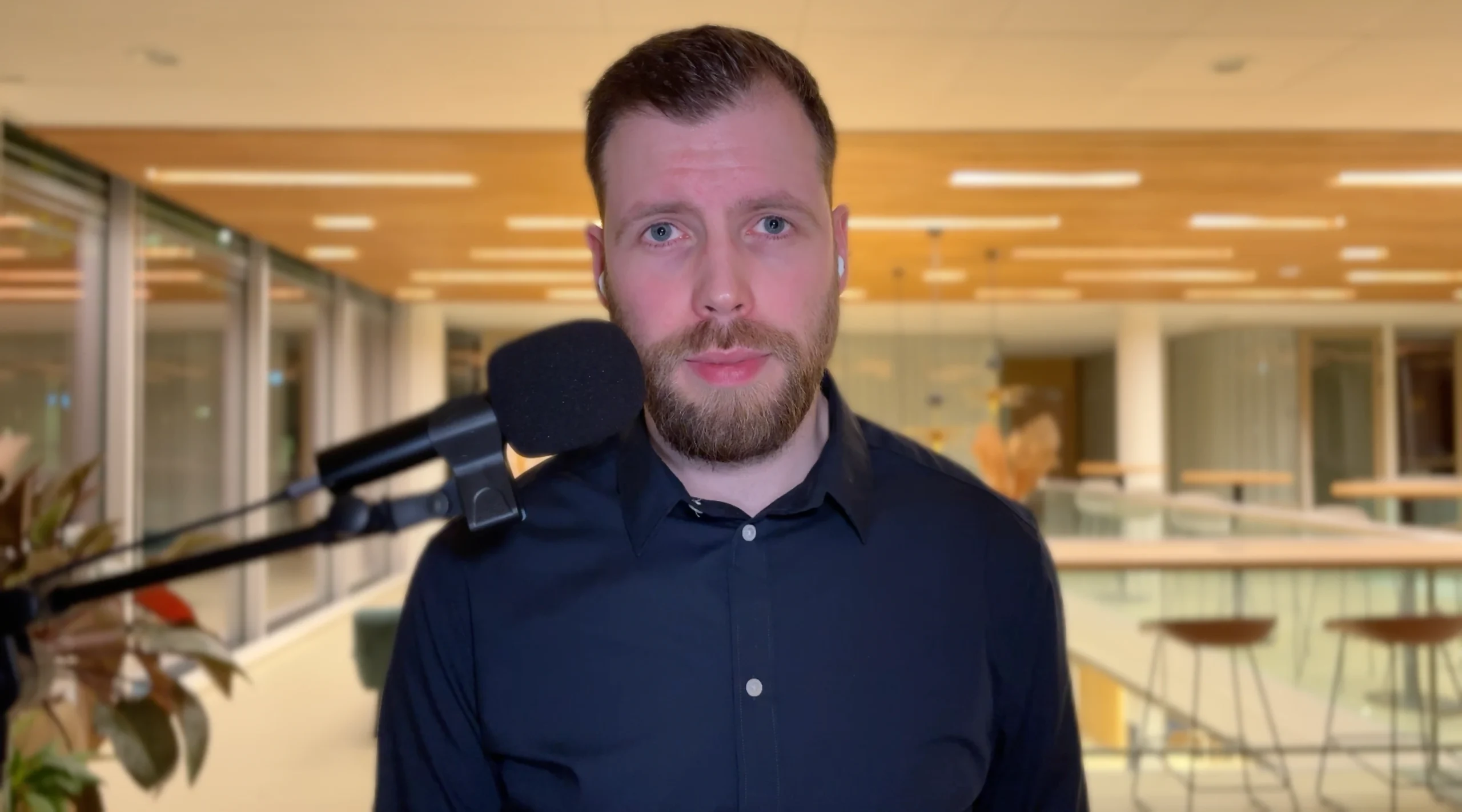
It would be my honor if you would watch or listen to the podcast. You can find it on Spotify, Apple Podcasts, and YouTube as ‘The Jeffrey van Leeuwen Podcast’. The video version is exclusive to YouTube (since episode 18, when a video-format was introduced) and Spotify. The episodes I mentioned above are among my personal recommendations, but there are plenty more topics covered that you might find more interesting. If you have any thoughts or ideas you’d like to share—or if you know someone who might be a fascinating guest (or even if you are this person yourself)—I’d love to hear from you.
“I love engaging people in thoughtful conversation.”
So I knew I would love to have a podcast to discuss ideas with people, just like the folks I mentioned earlier did on theirs. It sounded incredibly fun, but there are many risks attached that are really worth considering. Not only are you publishing yourself and your voice (and nothing ever gets forgotten on the internet, so a mistake can be very costly), you also open yourself up to all kinds of different risks. It can impact your social environment—people who disagree with you may not want anything to do with you anymore. It could affect your social network, your friends, your loved ones, your job, your entire livelihood. Putting yourself out there is not a choice to be taken lightly, especially when you’re delving into topics like psychology and psychoanalysis, war, religion, neurological disorders, and real human trauma—subjects that are, by their very nature, incredibly sensitive and revealing, and sometimes incredibly polarizing as well.
“These conversations are incredibly tough to have.”
Making this decision took me years—some more active than others, but years nonetheless. Marshall Mathers (Eminem) rapped in his iconic song Lose Yourself: “You better lose yourself in the music, the moment, you own it, you better never let it go. You only get one shot, do not miss your chance to blow.
This opportunity comes once in a lifetime, yo.” That opportunity presented itself for me in July 2024.
And I took it.
The Podcast
The official description of the podcast has been this from the very beginning: “The Jeffrey van Leeuwen Podcast aims to engage in thoughtful conversations, exploring diverse topics and speaking with people who have unique stories to tell and valuable knowledge to share across various fields.” Since the start, I’ve had the privilege to have many amazing people on, from all over the world, from the United States to Russia, and from Rwanda to Australia.
These conversations are incredibly deep and, frankly, incredibly tough to have. They require everyone involved to truly listen, because there is just no way to get to the essence of the conversation without it. But once that state of truly listening is achieved, there’s just so much beauty, knowledge, and raw human experience to uncover. And when those nuggets of pure insight are brought forward and carefully analyzed and transmuted, they enrich who we are. It’s truly a beautiful thing.
Human beings are amazing creatures.
Some examples of podcast episodes
Joseph B. Barbosa (EP 26), is a philosophical thinker who introduces the fundamentals of ethics and morality. We discuss different ethical dilemmas, confront tough questions about intentions and consequences, and offer practical insights on making decisions based on personal ethical frameworks.
Danny Orvomaa (EP 30), a former Israeli soldier who served in both Gaza and the West Bank. He talks the about dangers of societal complacency, and how being unprepared can lead to devastating consequences, as exemplified by events in Europe and Israel. He also refle
George van Houtem (EP 29), a negotiation expert from the Netherlands and a partner at the European Institute of Negotiation. George is also the author of multiple books, including The Dirty Tricks of Negotiation and The Psychology of Negotiation. We discuss the art of negotiation, practical techniques you can deploy, and their effects on people.
Dusty May Taylor (EP 18), a Canadian lady who grew up in a chaotic (and dangerous) environment—marked with severe domestic violence, witchcraft, and even mafia ties—and talks about how she went through this.
Adam Ayala (EP 24), a psychoanalyst from the United States who talks about the intricate dynamics of empathy and emotional presence, while also unpacking complex concepts like transference and ‘soul murder’ (a concept centered around deliberate traumatization).
From the Connected editors
If this article has piqued your interest, we recommend you listen to one of Jeffrey’s podcasts. It’s not just the interviews that are worthwhile. We also recommend his Reflections, such as the episode How empathy transforms our communication. Here he shows his ability to explore and thoroughly analyze subjects that most people carelessly pass by, and to derive new insights that he then shares with his public with a calm, somewhat teacher-like voice. In addition, the episode How videogames both enriched & derailed my life is also very worthwhile, if only for its nostalgic character (who can still remember those 1.44 MB diskettes or the first adventure game Prince of Persia?). This episode takes a very personal turn at the 21st minute, and ends with an episode about the game Silent Hill (as of minute 24:55 – not suitable for non-horror lovers) which goes to show the layered nature of this series.