
A deeper look into the art and storytelling of comics
By Nick de Kuyper from PNO Netherlands

Comics are much more than simple entertainment. They embody a unique artistic and narrative form, where the intersection of visual art and literature allows for the exploration of complex ideas. It resonates with readers of all ages, backgrounds, and cultures. From humorous strips to profound graphic novels, comics offer different layers of insights and can engage readers in reflections on morality, time, empathy, and give you a hint of irony. They can be consumed on a surface level too, for purposes of nostalgia, a specific art style, or pure enjoyment of the story. Comics hold a surprisingly broad capacity for entertainment.

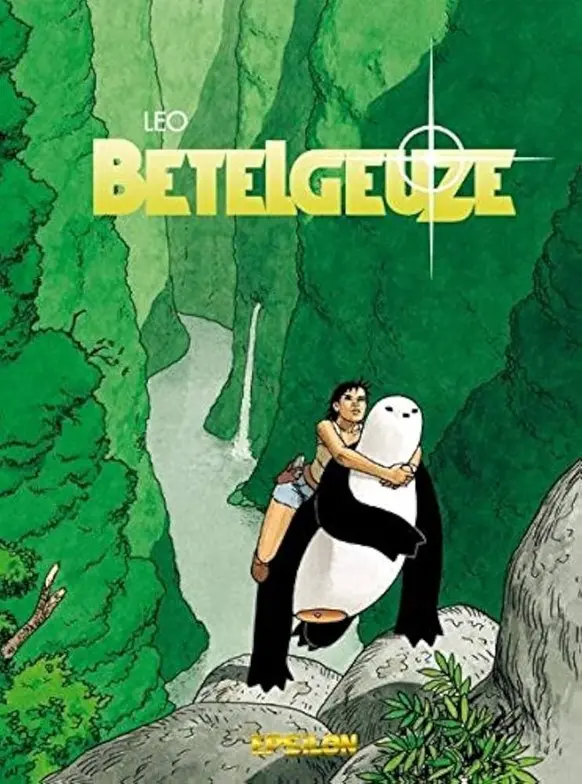
In writing this, I found inspiration from both personal experiences and insights from PNO colleagues throughout Europe. My own father is a devoted comic enthusiast with a vast collection that shaped my early appreciation for this medium. From visual-rich ‘Kuifje’ (also known as Tintin) to the humorously simple ‘Dirkjan’, each comic series has its unique charm. My childhood fascination, however, lies with ‘Betelgeuze’ by LEO (Luiz Eduardo de Oliveira), where surreal creatures and imaginative worlds linger in memory, fueling my love for comics that go beyond the ordinary.
Each comic series has its unique charm
Some people don’t immediately associate comics with the real world. But that relationship is more than existent, as the following examples show.
The Donald Duck Patent Case: comics as legal “prior art”
In a 1949 Donald Duck story, ‘The Sunken Yacht’ by Carl Barks, Donald and his nephews raise a sunken ship by filling it with ping-pong balls fed through a tube, creating enough buoyancy to bring the ship to the surface. Fast forward to 1964, when Danish inventor Karl Krøyer invented a similar technique (plastic balls) to raise a sunken freighter. He applied this method successfully to raise the ‘Al Kuwait’, which had capsized with 5,000 sheep aboard, risking contamination of Kuwait’s water supply.
Could Krøyer have taken the idea from Donald Duck?
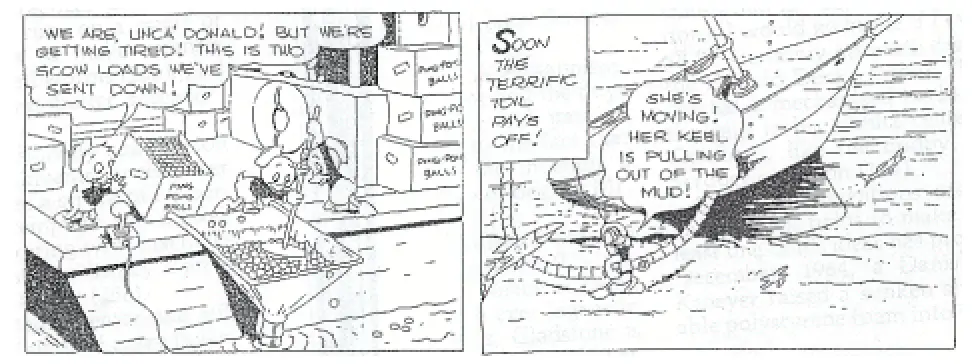
Images from ‘The Sunken Yacht’, © 1949 Walt Disney Corporation.
Krøyer later sought patents for this technique in several countries. While he was granted patents in the UK and Germany, his application in the Netherlands was famously rejected due to an issue of “prior art”. The Dutch Patent Office discovered that the method of raising a sunken vessel by filling it with buoyant balls had already been depicted in a 1949 Donald Duck comic. The technique used by Donald Duck closely resembled Krøyer’s invention. Could Krøyer have taken the idea from Donald Duck?
This comic’s depiction was considered legally significant prior art, meaning that the idea had already been “published,” and thus Krøyer’s patent was denied in the Netherlands. This unique case has become a famous example of how creative works, even if fictional, like comics can sometimes intersect with patent law.
History, trauma, and animal imagery
The graphic novel ‘Maus’ by Art Spiegelman stands as one of the most impactful examples of using comics to profoundly convey historical trauma. Spiegelman’s Pulitzer-winning work narrates the Holocaust through a unique visual technique where different groups of people are represented by animals. Spiegelman’s father, a Holocaust survivor, tells the story, making the novel both deeply personal and historically significant. ‘Maus’ has become a cornerstone in Holocaust education, demonstrating how comics can address historical events that are otherwise difficult to comprehend fully. Critics of ‘Maus’ have argued that representing humans as animals risks reinforcing stereotypes or dehumanizing those depicted.
However, scholar Paul Buhle offers a counterpoint, suggesting that “only the caricatured quality of comic art is equal to the seeming unreality of an experience beyond all reason.” For me, ‘Maus’ provided an accessible entry point to Holocaust history at a young age, allowing me to connect the historical accounts from my family with a broader, deeply visual narrative. I am glad my father gave me this novel.
The approach of human to animal representation is not unique to comics and has been used in other works too. In George Orwell’s 1945 novel ‘Animal Farm’, the animals represent different classes and ideologies in a cautionary tale about the corrupting influence of power. The ruling pigs embody the ruling class, gradually becoming indistinguishable from the oppressive humans they overthrew.
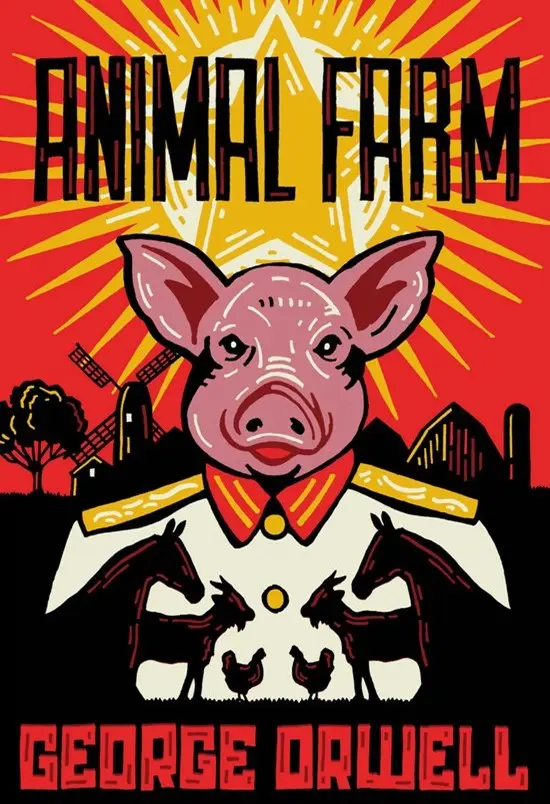
Each animal group reflects real-world socio-political identities, creating a simple yet effective commentary on the nature of revolution and tyranny.
More recently, rapper Joyner Lucas released his music video ‘Three Little Pigs’. It takes the classic story and flips it to a commentary on police violence. In Lucas’ retelling, wolves represent people of color, while pigs depict the police, highlighting issues of systemic racism and police brutality. His choice of animal characters enables Lucas to address a complex social issue in a way that’s accessible, evocative, and immediately understandable (as he is reading it as a bedtime story to his son in the video).

Comic reflections from PNO colleagues
Our PNO team members who were surveyed had different, but also common comic preferences. Peter Stuckert from PNO Germany is an ‘Asterix and Obelix’ enthusiast, appreciating the comic’s blend of humor and historical context. It gave him a lighthearted introduction to the Roman Empire in his youth. He reflects on how the series, while still cherished, may now attract older fans rather than younger readers who have a much broader comic selection today.
From EGEN, young Luc Zeilstra favors adventure-comedy comics, like ‘Donald Duck’ and ‘Lucky Luke’. He likes the light-hearted escapism they offer. Luc’s appreciation lies more in the storytelling than in the visuals, a common sentiment among those who value comics for their imaginative worlds and plotlines.
Creating an experience that is as introspective as it is enjoyable.

Valentin Polo from Spain grew up reading humor comics like ‘Mortadelo y Filemón’ and ‘Mafalda’, with the latter offering a particularly satirical look at societal issues. He values how comics like ‘Mafalda’ and ‘Asterix and Obelix’ can both entertain and provoke thought, creating an experience that is as introspective as it is enjoyable.
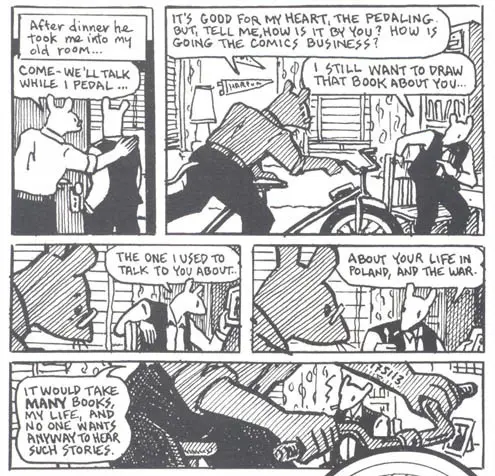
Comics remain a unique and multifaceted art form, one that invites readers into worlds where humor, adventure, and profound reflection coexist. Through their ability to blend visuals with narrative, comics allow for a distinct engagement with the realms of beauty and meaning. Whether through the metaphorical animal depictions in ‘Maus’, or the legal peculiarities of Donald Duck’s invention, comics prove themselves to be a profound storytelling medium capable of touching on most aspects of human existence. So, share your favorite comic with your colleague that sits next to you and see what nostalgia or discussion it can spark!

Special thanks to Peter van de Belt for sharing the Donald Duck story and to our international PNO team for their thoughtful reflections on this versatile medium.