
“Sleepless nights and a full agenda at work? Welcome to the club!” Maria said with a knowing smile, as Nick nodded, dark circles under his eyes. We were gathered in one of our common online Teams meetings, discussing not work, but the chaos we call parenting. Nick was sitting outside, enjoying the rare Dutch sunshine. Edgar just came back from a strenuous workout, and while he was drinking his recovery shake, Maria joined after she just finished dinner with her family. As new dads, Edgar and Nick swapped tips about sleep rhythm, exercise (or the lack thereof), and expressed our admiration for our wives’ resilience. Maria, already a veteran mom with her two-year old, grinned and said “Get ready guys for lots of fun. Those ‘terrible twos’ are approaching fast!”. It is the phase when toddlers start showing their personalities, complete with stubborn opinions, dramatic protests, and the crazy ability to turn even the simplest requests into huge struggles.
Get ready guys for lots of fun. Those ‘terrible twos’ are approaching fast!
This is an open talk between three PNO Innovation colleagues who recently became new parents and share their experiences and ideas of parenthood across two different cultures.
Nick:
“I recently moved to Eindhoven to be closer to work. Before I also did not live close to my family. They visit us when they can, but I think it is normal in the Netherlands to live separately from your parents, especially when you start your own family. My sister though, she loves her nephew so much that she would quit her job and become a ‘full-time nanny’!”
Maria sends a few pictures of
beautiful beach scenery in the Teams chat.
“Here is my view. I am spending some weeks at my parents’ holiday apartment in La Manga del Mar Menor – beautiful right? Finding a nanny or a place for babies in August is almost impossible, so I prefer to come here to work while grandpas are taking care of my son. In Spain, it’s more common for families to live together, sometimes even in the same house.
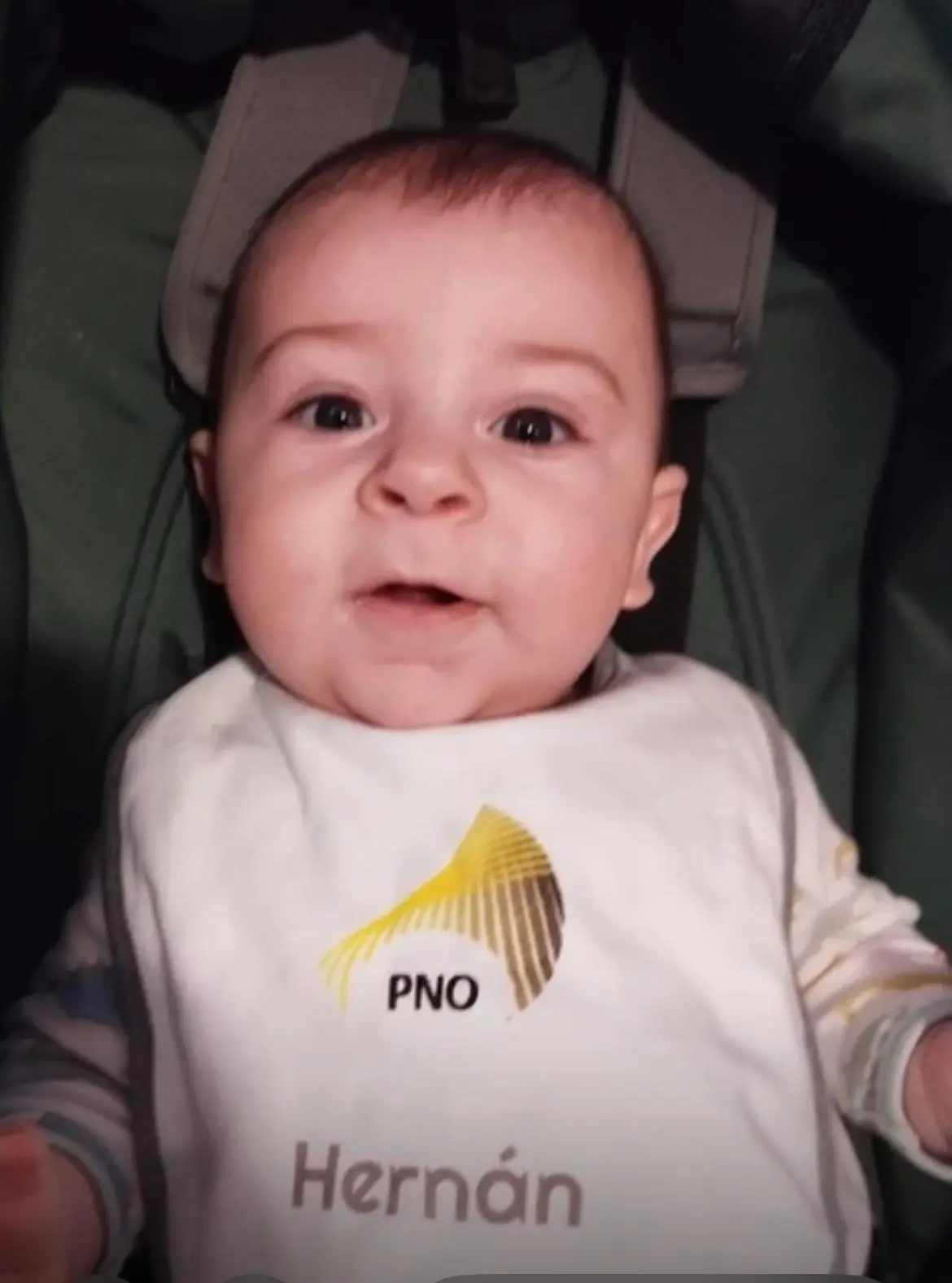
Maria’s baby Hernán
My parents are nearby, and they help out with my son all the time. It’s not just a cultural thing, but also because it’s so hard (and expensive) to leave a baby under 1 at kindergarten. My parents are healthy and with free time, also they ask me to spend time with him, it just makes sense for us right now.”
Nick:
“That sounds amazing to me! Free babysitting and 5 minutes’ walk to the beach? Eindhoven is quite bleak in comparison.”
Maria:
“It has its perks, yes, but there is still a lot to balance. Me and Edgar both work fully remotely. Having family around makes it easier, but it’s not a perfect solution. Spain does not offer a real work- live balance for families, especially when both parents are working. After the age of 8 months, they only offer “baby-parkings” where babies spend their day away from their parents’ protection.”
Edgar unmutes his microphone:
”Indeed, for me remote work has been a blessing and a game-changer: it not only allows me to spend some time with the baby, but also gives me the flexibility to keep balanced daily routines including my necessary workouts for my own well-being. I have over an hour of train trip to the office (and another hour back) which would leave me very little room for activities outside of work.”
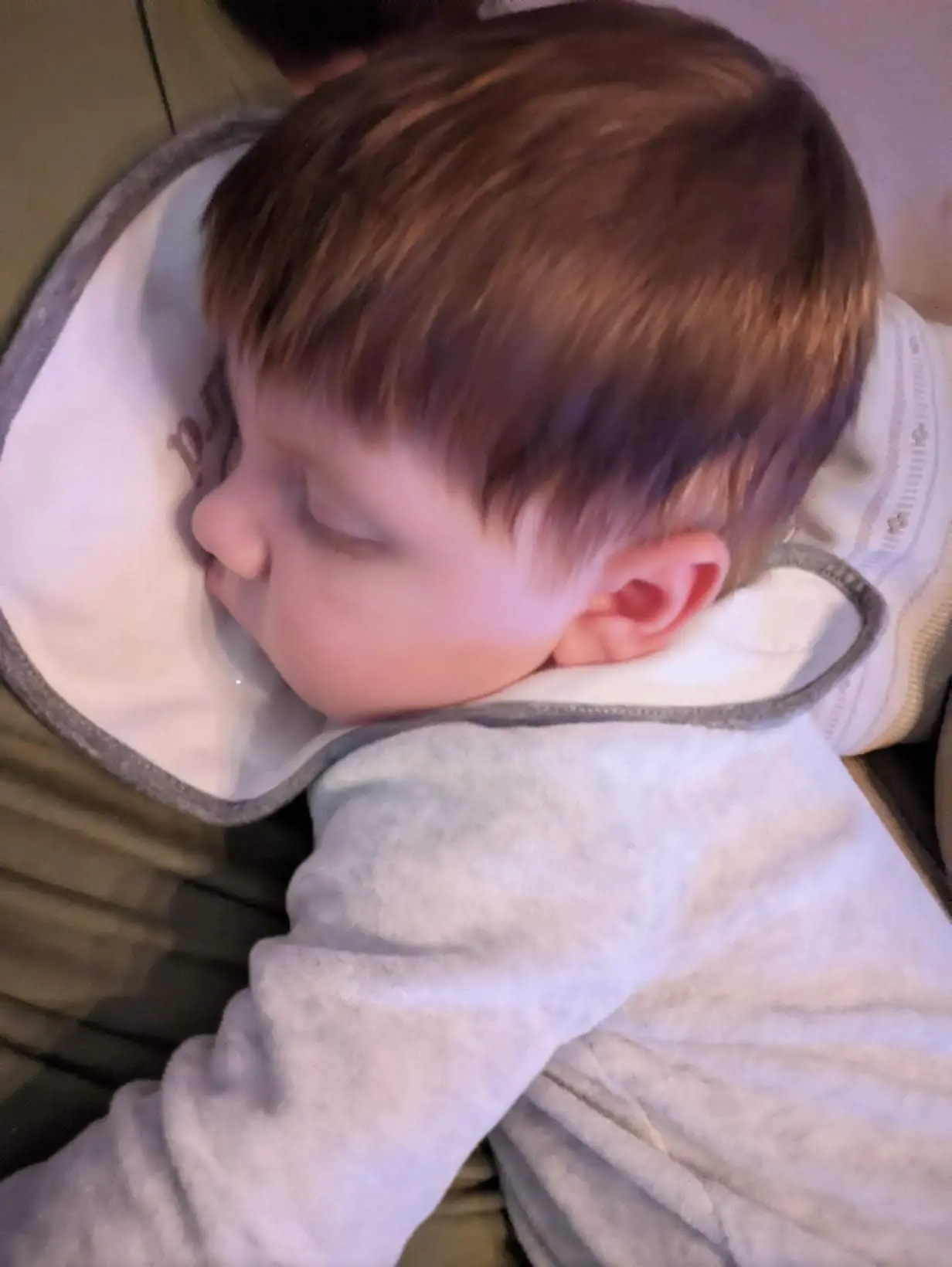
Edgar’s baby Gerard
Nick looks conflicted:
“My wife also wants to get back to work. We must arrange kindergarten soon. It really is quite expensive, and the waiting lists in Eindhoven are no joke. I keep telling myself that we will figure it out later, but ‘later’ is coming faster than I imagined.”
Nick:
“I took two full weeks off after my son was born, which helped me adjust to fatherhood. Now, I take one ‘papa’ day every Wednesday, which I find great for splitting up the workweek. It also gives me dedicated time with my son and my wife can relax from taking full-time care.”
“a growing trend toward gender equality in caregiving roles”
In Spain, both parents are entitled to 16 weeks of fully paid leave, which is covered by social welfare. The first six weeks are mandatory for both parents, ensuring that they can focus on their newborn without any work-related worries. After that, the remaining 10 weeks (still fully paid) can be taken more flexibly, allowing parents to tailor their leave according to their needs (simultaneously or separately). Edgar took advantage of this, rejoining PNO when his son was nine months old. Maria stayed at home for 16 weeks together with the father (as he was working far from home). He could also enjoy the breastfeeding permit with one additional month for smoothing Maria’s return to work while she chose the option of one hour reduction per day as she had to deal with sleepless nights and video calls.
Recently, Spain has introduced an equality-focused parental leave policy, ensuring that both parents have the same rights and opportunities when it comes to bonding with their child. This reflects a growing trend toward gender equality in caregiving roles, something that is slowly gaining more attention across Europe.
Nick:
“So, I am still looking for a place to settle down. The housing market in the Netherlands… it is difficult right now for a young family. Then there is the whole question of whether we want to stay here or move abroad once we are older. People in the Netherlands also love to retire in sunny Spain.”
Maria while laughing:
“You are welcome to join us here! Although, I am still trying to find a bigger house at my hometown with a courtyard or garden: my two-room apartment is fully booked with my little family (2 adults + 1 child + 2 pets) and remote working is not always easy. It is a challenge though. It is common for families in Spain to live in flats as big houses are expensive and salaries are not keeping up.”
Edgar:
“I can relate to that. We lived abroad for more than three years. Now, in my wife’s hometown we finally managed to buy our own flat. Although being so close to the sea and relatively close to Barcelona is amazing, the market is incredibly competitive considering it is a small city and prices are constantly rising.”
Maria:
“People here think twice before having kids because everything is so expensive, and well-paid jobs are hard to find. Sometimes, stability (in terms of work, a steady partner, and having your own space) only comes at 35 or older.” In Spain, the average age for having a first baby has risen to 32.6 years (31.8 in the Netherlands, compared to 29.4, the European average). “In my case, I became a mother at 39, which is now very common, with many women even having children in their 40s.”
Nick:
We are forced to rent right now, and saving money? Forget about it. But having a baby… Watching your kid grow up is priceless. It’s beautiful, no matter the financial stress.”
Edgar:
“We are indeed juggling, although it has been worth it for us. Besides, we are very lucky from our perspective once again thanks to remote work avoiding commutes and some of the childcare that would otherwise be mandatory.”
Maria:
“I agree… No matter how tough things get, the joys of being a parent are worth it. But it definitely makes you rethink what’s possible financially. Maybe that’s the reason why people are having pets instead of children…”
“It’s beautiful,
no matter the
financial stress.”
Maria:
“I had such a hard time with breastfeeding. I tried and tried, but it was emotionally draining. I had to let go of so many expectations and sometimes it feels like nobody really knows what is going on in the beginning.”
“all this pressure to do
things a certain way.”
Nick:
“My wife went through the same thing. She was really stubborn about wanting to breastfeed and she kept trying. Eventually we had great support from a lactation specialist. What we did not realize was how much of it is mental, not just physical. Sometimes the practical tips by itself are not enough. You have to understand why you are doing what you are doing.”
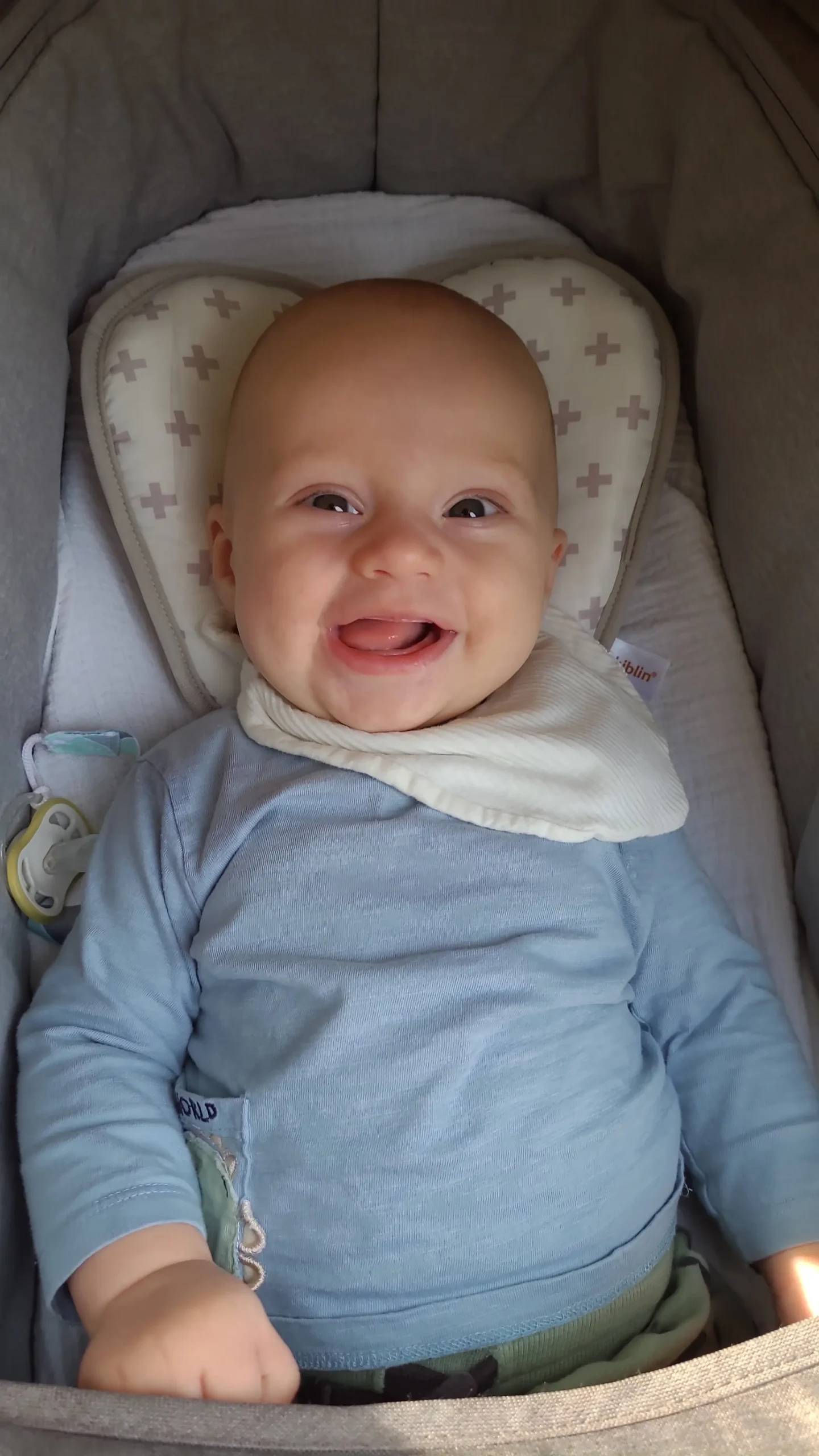
Nick’s baby Mathias
Maria nods:
“Exactly. There is all this pressure to do things a certain way, and that is exhausting.”
Edgar:
“We also felt pressured by how we kept our hobbies and personal interests. For us it was very important to recognize that our family is made up of a couple of individuals and taking care of one another at all levels strengthens us as a family. For us, balance has helped us to stay focused and to better handle the challenges of parenting.”
Maria:
“I remember trying to finish a big proposal while my son refused to sleep. It was a hard time when I often found myself staring at the computer screen, unblinking, my fingers resting on the keyboard and my mind going blank. My brain would radically go into survival mode.
The good thing is, PNO is flexible enough that I could balance it. Also, my colleagues showed understanding that when my kid is not sleeping, I am not sleeping either! I have a great support team in Spain, especially Edgar, with whom I always share parenting challenges.”
Edgar:
“Same here. Flexibility from the job has saved us more than once. You just have to roll with the punches. And honestly, that’s life, no? We adapt, get through the rough nights, and keep going. We’ve made it this far, so I think we are going to be all right. All three of us.”
“I think we are going to be all right. All three of us.”